

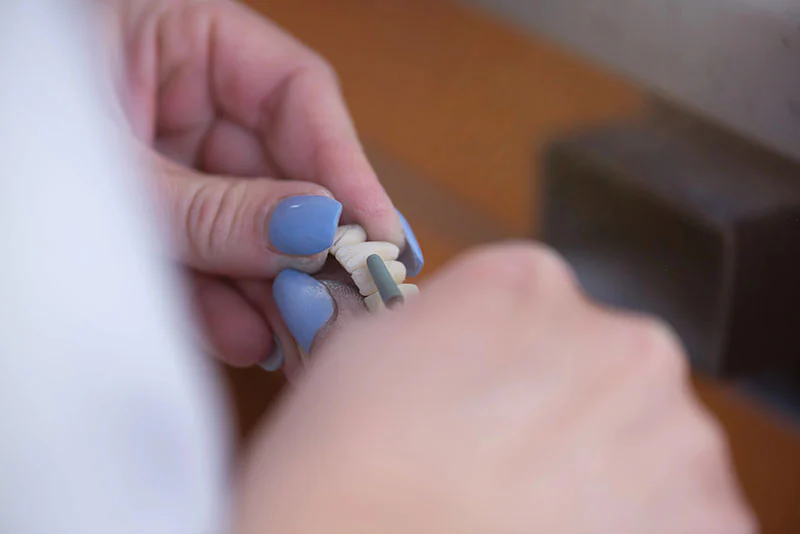
Missing teeth can affect much more than your appearance. Tooth loss can impact your ability to eat comfortably, speak clearly, and maintain your overall oral health. Fortunately, modern dentures offer reliable solutions for restoring your smile and confidence.
If you're exploring tooth replacement options, you may have heard the terms "full dentures" and "partial dentures." While both are designed to replace missing teeth, they serve different purposes. Understanding the differences can help you determine which option may be best for your needs.
What Are Dentures?
Dentures are custom-made dental appliances designed to replace missing teeth and restore the appearance and function of your smile. Today's dentures are more comfortable, natural-looking, and secure than ever before.
Depending on how many teeth are missing, your dentist may recommend either full dentures or partial dentures.
What Are Full Dentures?
Full dentures, sometimes called complete dentures, are used when all of the teeth in the upper arch, lower arch, or both arches are missing.
A full denture consists of a complete set of replacement teeth attached to a gum-colored base that fits comfortably over your gums.
Full dentures can help:
- Restore your ability to chew and speak
- Improve facial support and appearance
- Enhance confidence when smiling
- Replace an entire arch of missing teeth
Many patients choose full dentures after extensive tooth loss or when remaining teeth are no longer healthy enough to save.
What Are Partial Dentures?
Partial dentures are designed for patients who still have some healthy natural teeth remaining. Rather than replacing an entire arch, a partial denture fills in the gaps left by missing teeth.
A partial denture typically consists of replacement teeth attached to a framework that fits around your existing teeth to hold the appliance securely in place.
Partial dentures can:
- Replace several missing teeth in one area
- Prevent remaining teeth from shifting
- Improve chewing and speaking ability
- Preserve your natural teeth whenever possible
Because partial dentures work alongside your existing teeth, they offer a conservative solution for many patients.
Key Differences Between Full and Partial Dentures
While both options restore missing teeth, there are several important distinctions:
Number of Teeth Replaced
Full dentures replace all teeth in an upper or lower arch.
Partial dentures replace only a few missing teeth while preserving healthy natural teeth.
Support and Retention
Full dentures rest directly on the gums and rely on a precise fit for stability.
Partial dentures use your remaining natural teeth for additional support and retention.
Oral Health Considerations
Patients with healthy remaining teeth are often better candidates for partial dentures because they allow those teeth to remain functional.
Patients who have lost all or most of their teeth may benefit more from full dentures.
When Might Full Dentures Be Recommended?
Your dentist may recommend full dentures if:
- You have lost all of your teeth in one or both arches
- The remaining teeth are severely damaged or unhealthy
- Extensive tooth loss is affecting your ability to eat or speak
- You are looking for a complete smile restoration solution
For many patients, full dentures provide a practical and affordable way to restore both appearance and function after significant tooth loss.
When Might Partial Dentures Be Recommended?
Partial dentures may be a good option if:
- You are missing several teeth, but still have some healthy natural teeth remaining
- You want to prevent neighboring teeth from shifting
- You are looking for a removable tooth replacement option
- You want to preserve as much natural tooth structure as possible
Partial dentures can effectively restore your smile while helping maintain the alignment and health of your remaining teeth.
Are There Alternatives to Traditional Dentures?
Yes. Depending on your oral health and goals, your dentist may discuss additional tooth replacement options such as dental bridges or dental implants.
In some cases, dentures can even be supported by dental implants for increased stability and comfort. Implant-supported dentures offer improved chewing ability and may help preserve jawbone health over time.
Finding the Right Solution for Your Smile
Every smile is unique, and the best tooth replacement option depends on several factors, including the number of missing teeth, the health of your remaining teeth, your lifestyle, and your long-term goals.
A comprehensive dental evaluation can help determine whether full dentures, partial dentures, or another restorative solution is the right fit for you.
Restore Your Smile at Indian Creek Dental
If you're missing teeth and exploring your options, the team at Indian Creek Dental is here to help. We offer personalized restorative dentistry solutions designed to improve your comfort, confidence, and oral health.
Schedule a consultation today to learn more about full dentures, partial dentures, and the best way to restore your smile for years to come.


